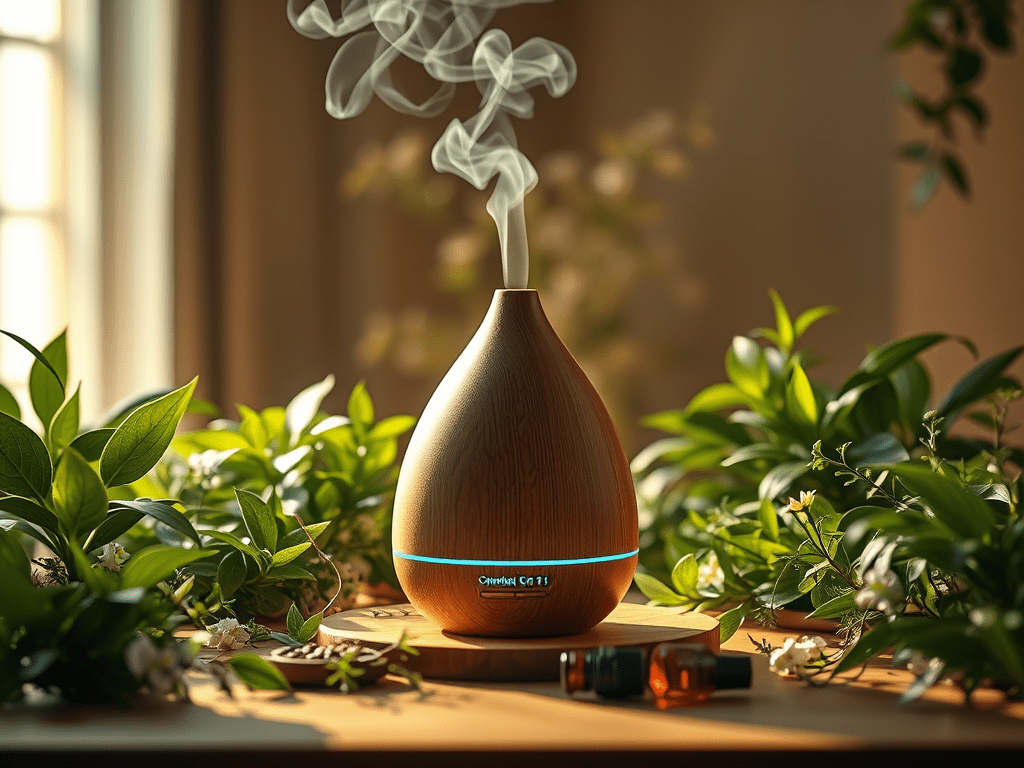
There is a moment in every aromatherapy session, just before the first drop of essential oil touches warm water or diffuses into the air, that feels almost sacred. The atmosphere shifts. The mind softens. The body prepares to release tension. Aromatherapy isn’t merely about scent; it is about creating an environment—an atmosphere—where healing, grounding, and balance can unfold.
This is why the guiding quote for the entire AI & the Natural Self series emerged so naturally:
Like aromatherapy, AI should enhance the atmosphere of life — never replace it.
This sentence holds the entire philosophy of conscious digital living. It is not anti-tech or anti-AI. It is pro-balance, pro-awareness, and pro-humanity. It invites us to see technology as something that, like plant medicine, can support our well-being without taking over our inner world.
This article explores that philosophy more deeply—through the lens of nature, the nervous system, the seven dimensions of wellness, and the idea that our technological tools can either harmonize with life or disrupt it. The goal is simple: to help readers understand how technology becomes deeply restorative when consciously integrated, just like aromatherapy becomes transformative when consciously used.
Technology is not the opposite of nature. But our relationship to it determines whether it becomes a healing element or a disruptive one.
Aromatherapy as a Model for Conscious Technology Use
When most people think of aromatherapy, they picture lavender for sleep or eucalyptus for congestion. But aromatherapy is much more than scent. It is an ecosystem: the origin of the plant, the state of the mind, the presence of intention, the ambiance, the timing, the dosage, the ritual surrounding the experience.
A diffuser cannot heal you by itself. But when used with intention, it creates an environment that supports the body’s innate healing intelligence.
AI works the same way. It does not heal, guide, or stabilize life on its own. But when integrated consciously, AI enhances clarity, improves flow, and supports your natural rhythms.
The wisdom behind aromatherapy offers a powerful metaphor:
• Aromatherapy does not replace the body’s systems; it supports them.
• AI does not replace human intuition; it supports it.
• Aromatherapy does not force the mind to slow down; it creates a space where slowing down is easier.
• AI should not force decisions or directions; it should create space for clearer discernment.
• Aromatherapy offers balance but never overrides the body’s natural intelligence.
• AI should offer efficiency and insights but never override the natural intelligence of the human mind and spirit.
When we approach technology with the same respect, intention, and awareness we bring to holistic modalities, we begin using AI in a way that feels deeply aligned with the natural cycles of living.
This is the future of conscious digital wellness.
The Atmosphere of Life: How We Shape It
Aromatherapy teaches us that environment influences everything. Stress rises or falls depending on what surrounds us. Creativity expands in certain atmospheres and contracts in others. The nervous system is constantly responding to cues—scent, sound, color, temperature, light, texture.
Technology is part of that atmosphere now.
It no longer sits on a desk, separate from life; it accompanies us:
• while we cook
• while we rest
• while we exercise
• while we parent
• while we work
• while we create
• while we reflect
• even while we heal
This makes conscious integration essential. Just as aromatherapy can overwhelm the senses when overused—or feel ineffective when used without intention—technology can either enhance or disrupt our internal atmosphere.
The key lies in how we choose to interact with it.
Are we using technology as a steady companion, or as a constant interruption?
Are we using AI to enrich our clarity, or to fill space that needs silence?
Are we using digital tools to support wellness, or to avoid listening inward?
Atmosphere is something we create every moment, whether intentionally or not. But when we consciously cultivate it, life changes.
Just as aromatherapy becomes powerful when the environment is prepared, AI becomes supportive when the internal environment is anchored.
Technology as Part of Nature’s Rhythm
It is easy to view technology as something separate from nature, but the truth is more nuanced. Humans are part of nature. Everything we create—whether stone tools, cities, books, or algorithms—emerges from human creativity, which is itself a natural force.
The question is not whether technology belongs in the natural world. It does.
The question is: Does our use of technology align with nature’s rhythms or fight against them?
Nature breathes in cycles.
Humans breathe in cycles.
Our nervous system needs cycles.
Our creativity thrives in cycles.
Our relationships deepen in cycles.
Most disharmony comes from losing those cycles—prolonged overstimulation, constant connection without pause, too much noise, too much speed.
Conscious digital living restores the balance:
• Work with tech, then step away.
• Learn from AI, then listen to intuition.
• Move quickly when needed, then slow down.
• Absorb information, then digest it in silence.
• Connect through screens, then deepen connection face-to-face.
Aromatherapy works in cycles too—diffuse, rest, breathe, reset.
AI should follow similar rhythms—engage, pause, reflect, realign.
The harmony is already available; we simply need to practice it.
Intention: The Heart of Conscious Technology Use
The biggest difference between holistic wellness and hyper-industrial wellness is intention.
Aromatherapy with intention is healing.
Aromatherapy without intention is just scent.
Technology with intention is empowering.
Technology without intention is just noise.
The same tool can be grounding or destabilizing depending on how we choose to use it.
Ask yourself:
• Why am I using this tool right now?
• Is this enhancing my life or distracting me from it?
• Is this supporting a dimension of my wellness or draining it?
• Am I reaching for this because I need clarity, or because I’m avoiding discomfort?
• Does this action align with the atmosphere I want to create for my day?
Aromatherapy encourages mindfulness in every drop.
Conscious digital living encourages mindfulness in every click, every scroll, every prompt, every response.
This is not self-policing. It is self-awareness.
Technology as a Wellness Ally
When approached wisely, AI and digital tools can genuinely support the seven dimensions of holistic wellness.
Physical Wellness
AI can help track patterns, guide healthier habits, provide reminders, and support routines. The key is not letting tools become coercive or anxiety-producing. Used gently and intentionally, they can support physical balance.
Emotional Wellness
Mindfulness apps, journaling prompts, soothing soundscapes, and digital reflective tools can complement emotional regulation—not replace it, but support it.
Intellectual Wellness
AI offers learning support, summaries, clarity, and insight that expand intellectual exploration—when used to enhance curiosity rather than shortcut growth.
Social Wellness
Technology connects families across distance, sustains friendships, and facilitates community. But conscious boundaries keep it from replacing deeper interpersonal connection.
Spiritual Wellness
This is where conscious use matters most. Technology can offer reminders, guided reflections, or creative support, but it cannot replace internal stillness, intuition, or personal connection to meaning.
Environmental Wellness
Smart home tools, nature soundscapes, and intentional digital curation can help create an environment that feels grounding, restorative, and aligned with natural rhythms.
Occupational Wellness
AI can help with organization, clarity, productivity, and creative development—if used as a partner rather than as the driver.
When we approach technology the way we approach holistic tools—with discernment, care, and respect—it becomes an ally in every dimension of well-being.
The Nervous System as the Decision-Maker
Just as the body signals when aromatherapy is too strong or too subtle, the nervous system signals when digital energy becomes overwhelming.
Early warnings include:
• tight shoulders
• shallow breathing
• distraction
• irritability
• mental fog
• overstimulation
• difficulty focusing
• emotional numbness
These are signs that our digital “dose” may be too high.
Likewise, the benefits of balanced technology use show up in the body too:
• regulated breathing
• grounded presence
• steady emotional state
• clarity
• energized focus
• improved creativity
• deeper rest
AI should never force us into overstimulation or exhaustion. If it begins to feel that way, the use is misaligned—just as aromatherapy used excessively can overwhelm the senses.
Your body always knows.
Your intuition always knows.
AI becomes supportive only when aligned with your natural rhythms.
Creating a Digital Aromatherapy Ritual
One of the most powerful ways to integrate this philosophy is to create a ritual that mirrors aromatherapy practice.
Step 1: Set your intention
Why are you using a particular tool right now?
Clarify the purpose.
Step 2: Prepare the environment
Just as you would dim the lights or clear the air before aromatherapy, prepare your space for positive digital engagement:
tidy, quiet, open, grounded.
Step 3: Begin with a breath
This regulates the nervous system and signals the mind that the digital experience is mindful, not reactive.
Step 4: Use the technology consciously
Allow clarity, creativity, or support to emerge—without rushing and without multitasking.
Step 5: Pause and disconnect
Honor the natural cycle of engagement and rest.
Step 6: Reflect
Ask how the experience felt:
Did it align with your wellness?
Did it enhance your atmosphere?
Did it support your goals or drain them?
This ritual transforms technology from a distraction into a practice.
Returning to the Main Quote
The entire AI & the Natural Self series rests on one truth:
Like aromatherapy, AI should enhance the atmosphere of life — never replace it.
This quote is more than a guiding principle.
It is an ethic.
A philosophy.
A wellness orientation for the digital age.
Technology is not here to replace human intuition, emotion, presence, or meaning. It is here to support them. To amplify clarity. To serve as a tool rather than a substitute.
Aromatherapy does not replace rest.
It supports it.
AI does not replace wisdom.
It supports it.
Aromatherapy does not replace breath.
It harmonizes with it.
AI does not replace humanity.
It harmonizes with it when used wisely.
When used with intention, technology becomes another element of modern wellness—respectful, balanced, aligned. When misused, it becomes noise, overwhelm, and disconnection.
The future of wellness is not digital or natural.
It is both—woven together with awareness.
The machine and the mind.
The tool and the intuition.
The information and the wisdom.
The algorithm and the atmosphere.
Harmony is possible.
It begins with intention.
We’re only at the beginning. As we approach 2026, a new chapter is forming—one that invites us to deepen our understanding of AI, mindfulness, and intentional living in a rapidly evolving digital world.
🌺 Remain on the Journey
Announcing a new year-long blog series that continues the conversation we began with AI & the Natural Self.
As you continue the current series, please plan to join us for four new posts each month throughout 2026 exploring how to live intentionally in an age of constant connection — where digital spaces become sanctuaries, and technology becomes a tool for clarity, creativity, and compassion.
Subscribe to receive each new post directly to your inbox and continue your journey toward conscious digital living.






 LGR Holistic Wellness
Leave a comment