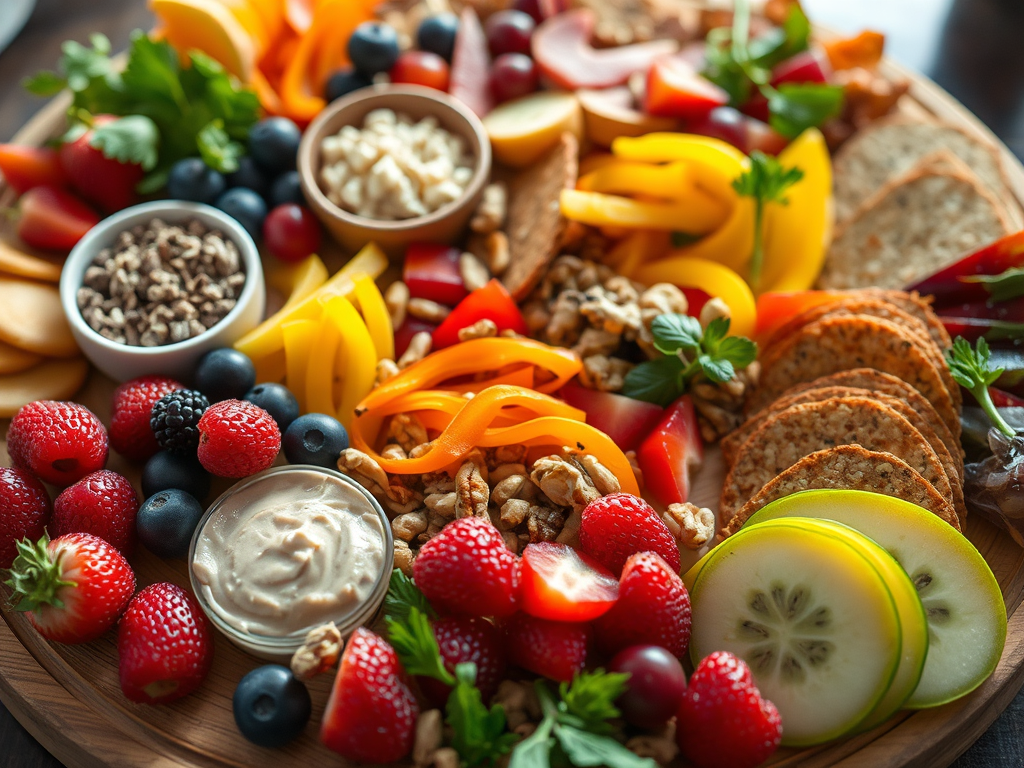
Charcuterie boards have become a staple of family gatherings, holidays, office events, and casual get-togethers. They bring people together, spark conversation, and create a sense of abundance and hospitality. Traditional boards often rely heavily on cured meats, processed cheeses, sugary spreads, and crackers with minimal nourishment. While beautiful, they don’t always leave guests feeling their best—especially during longer events where grazing is constant.
As a holistic nutritionist, I love reimagining the classic charcuterie board into something more body-supportive, flavorful, colorful, and deeply nourishing. A holistic wellness charcuterie board doesn’t remove the fun—it enhances it. It brings intention, balance, and nutritional value to a beloved entertaining staple while still feeling festive, generous, and exciting to eat.
This post will guide you through creating a wellness-focused board that works for any occasion: birthday parties, holiday gatherings, work conferences, baby showers, Sunday brunches, or cozy evenings with family. The goal is not perfection—it’s creating an abundant, colorful, nutrient-rich spread that supports energy, digestion, mood, hydration, and balance.
Let’s reimagine the grazing board through the lens of holistic wellness.
What Makes a Charcuterie Board “Holistic”?
A holistic wellness board is an intentional mix of the following:
- Colorful produce that hydrates and delivers antioxidants
- Fiber-rich foods that stabilize digestion
- Quality proteins to support fullness and blood sugar balance
- Healthy fats for mood, satisfaction, and nutrient absorption
- Wholesome carbohydrates for steady energy
- Mindful treats that bring joy and balance
- Flavor variety for sensory satisfaction
- Seasonal ingredients for alignment with nature
- Beautiful presentation to elevate the experience
The goal is to nourish both the body and the moment—because food is more than nutrition. It’s connection, celebration, conversation, and presence.
Foundations of a Holistic Wellness Charcuterie Board
Building a wellness board begins with categories rather than specific foods. This helps you design a balanced spread with many nutrients represented.
Below are the essential categories:
1. Abundant Fresh Produce (The Color Anchor)
Produce should be the foundation—not the afterthought. Think 50–60% of your board coming from fruits and vegetables. Fresh produce offers hydration, antioxidants, vitamins, minerals, fiber, and natural color that makes the board visually stunning.
Best fruits to include:
- Grapes (red or green)
- Strawberries
- Blueberries and blackberries
- Apple slices (spritzed with lemon to avoid browning)
- Pomegranate seeds (arils)
- Kiwi slices
- Orange wedges
- Pear slices
- Fresh figs (seasonal)
- Pineapple chunks
- Watermelon or cantaloupe cubes
Best vegetables:
- Cucumber rounds
- Carrot sticks
- Bell pepper strips
- Broccoli florets
- Snap peas
- Radishes
- Cherry tomatoes
- Celery sticks
- Roasted or steamed vegetables for winter boards
Fruits and vegetables support the body by providing hydrating water content, gut-friendly fiber, antioxidants that protect cells, and vitamins that support immunity, energy, and hormone balance. They also balance heavier foods on the board.
2. High-Quality Protein Options
Proteins add grounding, fullness, and blood sugar stability.
Healthy protein ideas:
- Hard-boiled eggs (halved or whole in shells)
- Sliced turkey or chicken breast
- High-quality nitrate-free meats (optional for mixed boards)
- Hummus and bean dips (protein + fiber)
- Lentil salad cups
- Nut butters for fruit pairing
- Greek or coconut yogurt (savory or sweet)
- Smoked salmon slices
- Roasted chickpeas
Proteins support the body by regulating appetite, keeping blood sugar steady, assisting with muscle repair, and reducing cravings.
3. Healthy Fats (The Satiation Boosters)
Healthy fats bring richness, flavor, and fullness.
Include options such as:
- Nuts (almonds, walnuts, pistachios)
- Seeds (pumpkin, sunflower)
- Olives
- Avocado slices or guacamole
- Cheese (quality, organic options; dairy-free cheeses work beautifully too)
These healthy fats support brain function, hormone health, mood regulation, and help the body absorb fat-soluble vitamins A, D, E, and K.
4. Wholesome Carbohydrates and Grains
Offer a mix of textures and fiber-rich options.
Wellness-based options:
- Whole-grain crackers
- Seeded crackers
- Sourdough slices
- Brown rice cakes (broken into pieces)
- Quinoa salad mini bowls
- Homemade granola clusters
Avoid refined, sugary crackers and stick to whole-food grain options whenever possible.
5. Dips, Spreads, and Flavor Add-Ons
Dips are the heart of a charcuterie board—they bring color, depth, and nutrition.
Healthy dip options:
- Homemade hummus (classic, roasted red pepper, or beet)
- Greek yogurt herb dip
- Guacamole
- Tzatziki White bean dip
- Pesto (basil, cilantro, or kale-based)
- Olive tapenade
These dips bring proteins, herbs, fiber, healthy fats, and natural flavor.
6. Mindful Treats
A balanced board includes joyful elements that feel celebratory.
Mindful treat options:
- Very dark chocolate squares
- Cocoa-dusted almonds
- Small bowls of honey or maple drizzle
- Spiced roasted nuts
- Date slices stuffed with almond butter
- A few pieces of dried fruit for color (not the star of the board)
The goal is to offer sweetness that complements the board without shifting the entire energy of the meal.
Choosing a Theme for Your Wellness Board
A theme brings cohesion and interest. Consider these ideas:
1. Mediterranean Board
This board would include:
- Hummus varieties
- Olives
- Cucumbers
- Tomatoes
- Feta or dairy-free feta
- Olive oil drizzle
- Pita triangles
- Herbs like oregano and mint
2. Winter Wellness Board
- Roasted vegetables
- Pomegranate seeds
- Spiced nuts
- Herbed yogurt dip
- Whole-grain crackers
- Dark chocolate
3. Brunch Board
- Hard-boiled eggs
- Yogurt and granola cups
- Fresh berries
- Whole-grain mini toasts
- Smoked salmon
- Avocado
4. Plant-Based Board
- Multiple hummus flavors
- Lentil salad
- Marinated tofu cubes
- Olives and nuts
- Fruit and vegetables
- Dairy-free cheeses
5. Kid-Friendly Board
- Mini fruit skewers
- Peanut butter or almond butter for dipping
- Cheese cubes or dairy free cheese shapes
- Veggie sticks
- Whole-grain crackers
- Yogurt dip
How to Arrange a Beautiful Wellness Board
Presentation elevates the entire experience.
1. Start with your largest items
Place bowls of dips or yogurt first.
2. Create produce clusters
Group fruits and vegetables by color for visual impact.
3. Add protein and fats next
Place eggs, salmon, nuts, and cheese throughout the board.
4. Fill small gaps with pops of color
Use berries, herbs, pomegranate seeds, or nuts.
5. Layer textures
Crisp, creamy, crunchy, soft—variety makes the board more exciting.
6. Garnish naturally
Fresh herbs like rosemary, mint, basil, or thyme add aroma and beauty.
Holistic Wellness Recipes for Your Charcuterie Board
These recipes are nutrient-dense, simple, and perfect for any grazing table.
Recipe 1: Roasted Red Pepper Hummus
Ingredients:
- 1 can chickpeas, drained
- 1 roasted red pepper
- 1 tbsp tahini
- 1 tbsp olive oil
- 1 garlic clove
- 1–2 tbsp lemon juice
- Salt and pepper
Instructions: Blend all ingredients until smooth.
Why It’s Nourishing: Fiber, plant protein, vitamin C, healthy fats.
Recipe 2: Greek Yogurt Herb Dip
Ingredients:
- 1 cup Greek yogurt or coconut yogurt
- 1 tbsp olive oil
- 1 tbsp lemon juice
- 1 tbsp chopped dill
- 1 tsp garlic powder
Instructions: Mix all ingredients. Chill before serving.
Why It’s Nourishing: Protein, probiotics, digestion support.
Recipe 3: Spiced Maple Walnuts
Ingredients:
- 1 cup walnuts
- 1 tbsp maple syrup
- ½ tsp cinnamon
- Pinch of sea salt
Instructions: Roast at 300°F for 10 minutes.
Why It’s Nourishing: Plant-based omega-3s, minerals, gentle sweetness.
Recipe 4: Mini Veggie Skewers
Ingredients:
- Cherry tomatoes
- Cucumber slices
- Bell peppers
- Olives
Instructions: Thread veggies on toothpicks.
Why It’s Nourishing: Hydration, antioxidants, easy snacking.
Recipe 5: Date and Almond Butter Bites
Ingredients:
- Medjool dates
- Almond butter
- Crushed pistachios
Instructions: Fill dates with almond butter, top with crushed nuts.
Why It’s Nourishing: Natural sweetness, minerals, fiber.
Tips for Making the Board Work for Everyone
A holistic board should be inclusive and accessible.
1. Provide gluten-free options
- GF crackers
- Veggie sticks as dippers
- Nuts and seeds
2. Offer dairy-free dips
- Coconut yogurt dip
- Bean-based dips
- Dairy-free cheeses
3. Label allergens
A small card can make guests feel safe and welcomed.
4. Add hydration
Sparkling water with fruit slices pairs beautifully with a wellness board.
When to Serve a Holistic Wellness Charcuterie Board
These wellness boards work for:
- Holiday gatherings
- Birthday parties
- Baby or bridal showers
- Work meetings or conferences
- Sunday brunch
- Neighborhood potlucks
- Girls’ nights
- Movie nights
- Summer picnics
- Family hangouts
They travel well, please diverse guests, and leave everyone feeling energized rather than sluggish.
Final Thoughts: Nourishment as a Shared Experience
A holistic wellness charcuterie board is more than food—it’s a shared experience rooted in care, connection, and nourishment. It honors the body with balanced nutrients while offering beauty and abundance for the senses.
Whether you’re hosting a festive event or bringing a dish to a get-together, a wellness-focused board shows intention. It supports energy, reduces stress on digestion, and aligns with a natural, whole-food lifestyle.
With color, simplicity, thoughtful ingredients, and flavorful recipes, your board can become a centerpiece of joy and wellbeing at any event.



 LGR Holistic Wellness
Leave a comment