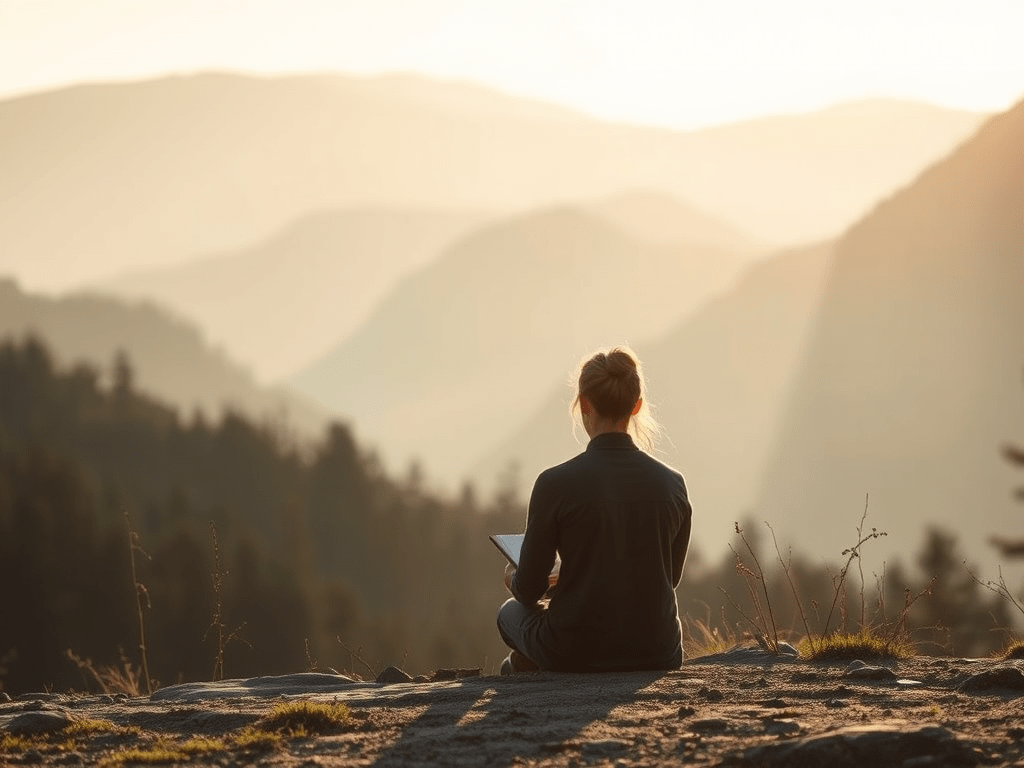
In a world constantly humming with noise, connectivity, and urgency, solitude can feel foreign—sometimes even uncomfortable. Yet it is often in these quiet, unaccompanied moments that we meet ourselves most honestly. Solitude, when embraced intentionally, is not loneliness. It is presence. It is listening. It is returning.
Throughout every spiritual tradition, solitude is a sacred tool. From prophets retreating to mountains, to mystics sitting in stillness, to everyday seekers carving out quiet corners of the day—solitude has always played a vital role in personal transformation and spiritual deepening. It is not about isolation. It is about realignment. Solitude offers the chance to step away from external expectations and reconnect with your truest self, your deepest wisdom, and the source that nourishes your soul.
In this post, we’ll explore how solitude contributes to spiritual growth, emotional clarity, and holistic wellness. We’ll look at the difference between loneliness and chosen solitude, how to create space for sacred aloneness in modern life, and seven holistic benefits of solitude that support every dimension of your wellbeing.
Whether you’re longing to reconnect with yourself, feel more spiritually aligned, or simply breathe deeper, solitude may be your most powerful, and most overlooked, ally.
Solitude vs. Loneliness: Knowing the Difference
It’s important to begin by acknowledging the difference between solitude and loneliness. Loneliness is marked by a sense of emotional absence—wanting connection but feeling isolated or unseen. It is often painful and can lead to spiritual disconnection.
Solitude, on the other hand, is a chosen state of being alone. It is the conscious decision to step away from external input in order to turn inward. Solitude is expansive, nourishing, and regenerative when approached with intention.
In solitude, we are not escaping life—we are turning toward it more fully. Without distraction. Without noise. Without performance. Just presence.
When embraced regularly, solitude offers the sacred spaciousness needed for listening, healing, and receiving spiritual clarity.
Why Solitude Matters for Spiritual Growth
Spiritual growth is not linear, performative, or externally validated. It unfolds in cycles, often quietly. It invites us to come home to ourselves, strip away what no longer serves us, and move deeper into the truth of who we are.
Solitude provides the fertile ground for that growth to take root.
In solitude:
- You slow down enough to hear the whispers of intuition
- You release the noise of comparison and expectation
- You gain clarity on what feels right and real for you
- You create space for divine connection without filters
Spiritual practices like meditation, prayer, journaling, breathwork, and nature immersion are all enhanced when done in solitude. That’s because solitude removes distractions, heightens awareness, and brings you into direct relationship with your inner world.
The path to spiritual reconnection often begins in stillness. And stillness thrives in solitude.
7 Holistic Benefits of Solitude for Spiritual Reconnection
Solitude doesn’t just serve your spirit—it nourishes your entire being. Let’s explore seven interconnected benefits that illustrate how solitude supports your physical, emotional, intellectual, social, spiritual, environmental, and occupational wellness.
1. Emotional Reset and Nervous System Regulation
The body holds onto emotional residue long after a stressful moment passes. When constantly bombarded by stimulation, your nervous system rarely gets a chance to reset. Solitude creates the opportunity to downshift from reactive to reflective.
By stepping away from external pressures, your parasympathetic nervous system has space to engage—slowing your heart rate, calming your mind, and soothing emotional tension.
In solitude, you:
- Breathe more deeply
- Process feelings without interruption
- Move from anxiety to presence
Even short periods of silence—5 to 10 minutes a day—can lower cortisol levels and improve emotional regulation.
This isn’t just about feeling better in the moment. Regular solitude becomes a foundation for resilience and inner safety.
2. Reconnection with Intuition
In a noisy world, intuition often gets drowned out by the opinions, energies, and expectations of others. Solitude restores your connection to your own inner knowing.
When you remove the noise—social media, email alerts, conversations, even helpful advice from others—you allow space to ask, “What do I know to be true?”
In solitude, you learn to:
- Distinguish your voice from others’
- Hear your intuitive nudges more clearly
- Cultivate trust in your internal guidance
Whether it comes as a gut feeling, a visual image, or a quiet certainty, your intuition needs quiet space to be heard. Solitude strengthens your relationship with this inner compass.
3. Deepened Spiritual Practice
Solitude allows your spiritual practice to expand in both depth and authenticity. Without the need to explain, impress, or perform, you are free to engage with the sacred on your own terms.
This could mean:
- Meditating without a timer
- Writing prayers in your journal
- Sitting in nature and noticing the wind
- Reading spiritual texts slowly and reflectively
- Simply being in the presence of divine stillness
Spiritual practice becomes more intimate in solitude because it becomes more honest. You’re not doing it for anyone. You’re doing it with your own soul.
Over time, these solo moments become anchor points in your spiritual rhythm.
4. Increased Creativity and Clarity
Solitude creates fertile ground for inspiration. With fewer inputs and distractions, your mind becomes more spacious—and spaciousness is where creativity thrives.
Whether you write, draw, plan, problem-solve, or vision-cast, solitude helps you connect to your creative flow and access higher levels of clarity.
You begin to:
- Hear the ideas that have been trying to get through
- See new possibilities that were once hidden
- Make connections that move you forward
Intellectual wellness is about more than knowledge—it’s about reflection, expansion, and synthesis. Solitude supports all three.
5. Healing from External Overwhelm and Burnout
One of the less talked-about causes of burnout is emotional and energetic overstimulation. Constant exposure to others’ needs, stories, and energies can deplete your reserves.
Solitude offers space to:
- Reclaim your energy
- Separate your feelings from others’
- Reflect on what is yours to carry—and what is not
You don’t need to be “on” in solitude. You don’t need to fix, entertain, or explain. That alone can be incredibly healing.
Even 20 minutes a day of intentional solitude can prevent the buildup of energetic residue that leads to chronic fatigue or burnout. It helps you recover from life so that you can return to it fully.
6. Recalibration of Purpose and Priorities
Without time to reflect, we often live by default—doing what’s expected, what’s familiar, or what others model for us. Solitude creates a pause, a still point, where you can recalibrate.
You may begin to ask:
- What truly matters to me now?
- Am I living in alignment with my values?
- What rhythms, relationships, and routines need reevaluation?
This is where occupational wellness and life purpose come into focus. Solitude allows you to zoom out and realign your daily choices with your deeper calling.
Sometimes the most profound course corrections begin in the quiet moments no one else sees.
7. Spiritual Intimacy Without Intermediaries
Perhaps the most sacred benefit of solitude is the deepened intimacy it creates between you and the divine. You are not required to go through a gatekeeper, recite perfect words, or show up in any particular way. You simply come as you are.
In solitude, spiritual connection becomes less about ritual and more about relationship.
You may find:
- Stillness becomes a prayer
- Nature becomes your sanctuary
- Your breath becomes your anchor
- Silence becomes a form of worship
Solitude reminds you that spiritual connection is not reserved for religious institutions or structured settings. It is available to you in any moment that you are willing to pause and be present.
Creating Solitude in Modern Life
You don’t need a cabin in the woods to cultivate the benefits of solitude. You simply need intention and practice.
Here are a few ways to integrate solitude into your regular routine:
- Early Morning Quiet Time
Begin your day without your phone. Journal, meditate, or simply sit quietly with a cup of tea. - Nature Walks Without Distraction
Leave the earbuds at home and walk slowly through a local park or trail. Listen to the natural world. - Silent Evenings
Dedicate one evening a week to silence—no music, screens, or conversation. Light a candle and just be. - Solo Retreat Days
If possible, schedule a day or even a few hours each month to retreat. Read, write, rest, and reflect without agenda. - Bathroom Sanctuary
Even a 10-minute bath in silence with no interruptions can create a pocket of solitude. - Mindful Mealtimes
Eat one meal a week in silence. Chew slowly. Reflect. Give thanks.
Solitude doesn’t require perfect conditions. It requires presence. Start where you are, with what you have.
In Summary: Solitude as Sacred Space
Solitude is not about escaping your life. It’s about re-entering it with more clarity, depth, and authenticity.
When we step away from the noise, we hear the whispers of our soul. When we stop trying to keep up, we reconnect with our true pace. When we allow ourselves to be alone—not lonely, but alone—we remember who we are.
Solitude becomes a practice of realignment. It centers us. Softens us. Strengthens us.
In solitude, you do not become someone else. You become more fully yourself.
And that, truly, is the essence of spiritual growth.






 LGR Holistic Wellness
Leave a comment