
In today’s fast-paced, achievement-driven culture, goal setting has become synonymous with productivity, hustle, and success. From five-year plans to bullet journals, vision boards to SMART goals, we’re taught to measure our lives in milestones and progress charts. But what if the goals we set, while ambitious and well-intentioned, are ultimately misaligned with who we truly are?
What if, instead of moving us closer to fulfillment, our goals are pulling us further away from it?
That’s where purposeful goal setting comes in—a more mindful, values-aligned approach that ensures the ambitions we pursue are not only achievable but also meaningful. When we align our goals with our core values, we begin to experience growth that is not just external, but deeply internal. We trade burnout for clarity, comparison for authenticity, and short-term wins for long-term peace.
This post is your invitation to reimagine what goal setting can look like. It’s not just about what you want to do—but who you want to be, and why.
Why Traditional Goal Setting Often Falls Short
Many people are familiar with the process of setting goals that are SMART: Specific, Measurable, Achievable, Relevant, and Time-bound. While this framework has its place, especially in professional and academic settings, it often misses a crucial component: soul.
Too often, we set goals based on external influences—what we think we should do, what others expect from us, or what society defines as success. We chase titles, numbers, and accomplishments without asking whether those achievements actually fulfill us.
This can lead to what psychologists call “arrival fallacy”—the false belief that once we achieve a certain goal, we’ll finally feel happy, worthy, or complete. But without a deeper alignment, the finish line just moves further away. We keep running, but we never arrive.
The antidote to this cycle is goal setting with purpose. Purposeful goals are not just boxes to check off—they are bridges that connect your daily actions with your deeper values and vision.
Understanding Core Values: The Compass of Purpose
Your core values are the fundamental beliefs that guide your decisions, behavior, and sense of self. They’re not just ideals you admire—they’re the principles that, when honored, make you feel most alive, aligned, and grounded.
Examples of core values might include:
- Integrity
- Connection
- Growth
- Freedom
- Creativity
- Compassion
- Spirituality
- Authenticity
- Adventure
- Simplicity
When your goals reflect your core values, you create a foundation that is both motivating and sustainable. You’re no longer chasing success in someone else’s shoes—you’re walking your own path.
To begin aligning your ambitions with your values, you must first identify what those values are.
Discovering Your Core Values
The process of identifying core values is reflective and personal. Here are a few prompts to help you get started:
- When have I felt most fulfilled and alive? What values were being honored in that moment?
- When have I felt out of alignment or deeply frustrated? What values might have been ignored or compromised?
- Who do I admire, and what qualities or principles do they embody?
- What principles am I unwilling to sacrifice, even in difficult circumstances?
Once you have a list of potential values, narrow it down to your top five to seven. These are your non-negotiables—the values that feel central to who you are.
You might notice that some of your current goals don’t reflect these values at all. That’s a powerful realization. It doesn’t mean you’ve failed—it means you’re waking up to a new way of living.
From Values to Vision: Creating Purposeful Goals
Once you’re clear on your values, the next step is crafting a vision for your life that reflects them. This isn’t about setting rigid expectations—it’s about imagining a life that feels meaningful and aligned.
Start by asking:
- If I honored my core values every day, what would my life look like?
- What kind of relationships would I nurture?
- What work would I do, and how would I approach it?
- How would I spend my time, energy, and resources?
- What impact would I want to have on others and the world?
Let your answers guide the goals you create. Each goal becomes a stepping stone toward that vision—not just an achievement, but an embodiment of your values.
Setting Aligned Goals in Key Areas of Life
To make this process actionable, consider setting goals in several dimensions of your life, all anchored in your core values.
- Health and Wellness
Value: Vitality
Goal: Integrate daily movement that brings me joy (like dance, yoga, or hiking) to honor my body’s energy and strength. - Relationships
Value: Connection
Goal: Schedule one meaningful conversation or quality moment each week with a loved one. - Career or Purpose
Value: Growth
Goal: Enroll in a course or mentorship program that challenges me and supports my long-term mission. - Spirituality or Inner Peace
Value: Presence
Goal: Begin each morning with ten minutes of meditation, prayer time or journaling to ground myself. - Creativity and Play
Value: Expression
Goal: Dedicate one evening per week to a creative hobby, free from judgment or productivity goals. - Finances
Value: Security or Freedom
Goal: Create a savings plan that aligns with my vision of financial stability and choice.
When you craft goals from this place of alignment, motivation comes more naturally. You’re not just working toward something—you’re living towards and into something.
Making Goals Stick: Habits, Rituals, and Accountability
Even the most values-aligned goals require structure and support to come to life. Here are a few ways to anchor your goals into daily practice:
1. Build Habits, Not Just Goals
Instead of focusing solely on the outcome, design small, consistent habits that reflect your values. If your goal is to write a book, your habit might be to write for 30 minutes every morning. If your goal is to feel more connected, your habit might be to call a friend every Friday afternoon.
2. Create Rituals of Reflection
Set aside time weekly or monthly to reflect on your goals. Ask:
- Am I still aligned with this goal?
- What’s working, and what needs adjustment?
- Is this goal still rooted in my core values?
3. Track Progress Holistically
Don’t just measure success in numbers. Track how you feel. Are you more energized, more at peace, more connected to yourself and others? Emotional and energetic shifts are just as valid as external milestones.
4. Use Visual Cues
Create a values-based vision board or a goals map where each goal is connected to a value. Seeing the “why” behind your goals keeps them alive and meaningful.
5. Find an Accountability Partner or Community
Share your values and goals with someone who supports your growth. Regular check-ins can offer encouragement, insight, and mutual celebration.
Letting Go of Misaligned Goals
One of the most empowering aspects of purposeful goal setting is the permission it gives you to let go. Not every goal you’ve set needs to be pursued. Some were based on old versions of you. Some were rooted in fear or comparison. Some were well-meaning but no longer fit your current truth.
Letting go is not quitting—it’s choosing. Choosing to realign. Choosing to evolve.
Ask yourself:
- Does this goal still reflect my values today?
- Am I pursuing this because it excites me—or because I feel obligated?
- What would it feel like to release this goal and create space for something new?
Give yourself the grace to recalibrate. Your goals should grow as you do.
Living a Goal-Oriented Life Rooted in Purpose
Purposeful goal setting is not just a planning strategy—it’s a lifestyle. It invites you to live more consciously, to make decisions with intention, and to honor the deepest parts of yourself in everything you do.
It’s about becoming someone who doesn’t just achieve—but someone who aligns. Someone who leads with values. Someone who defines success by inner fulfillment, not just external outcomes.
When you live this way, your goals become more than tasks. They become expressions of who you are and who you’re becoming.
So the next time you sit down to set a goal, pause. Ask yourself: What do I value most deeply? How can this goal reflect that truth? What kind of life am I building—not just on paper, but in the way I wake up, speak, love, and lead?
Purpose doesn’t live in the future. It lives in your daily choices. And every goal you set with intention brings you closer to the life you were meant to live.
Ready to Set Goals That Actually Matter to You?
If you’re tired of chasing goals that leave you feeling burned out or disconnected, it’s time to shift your focus inward.
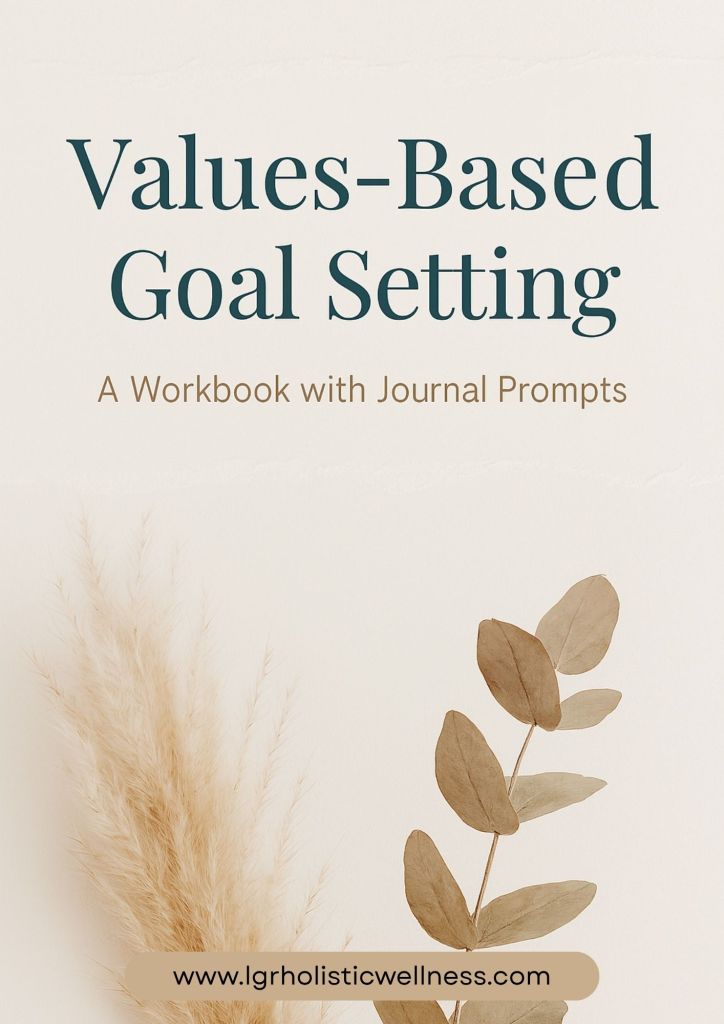
The Values-Based Goal Setting Workbook is your free, step-by-step guide to setting meaningful goals that reflect who you truly are—not just what the world expects from you.
Inside, you’ll:
- Discover your personal core values through guided reflection
- Create goals that align with your values across every area of life
- Gain clarity on what to focus on—and what to release
- Use weekly journal prompts to stay accountable and aligned
This isn’t just another goal planner—it’s a mindset shift, a clarity tool, and a values-driven strategy for living with purpose.
Download the free workbook now and start setting goals that feel like home.
You deserve a life that reflects what truly matters to you.






 LGR Holistic Wellness
Leave a comment