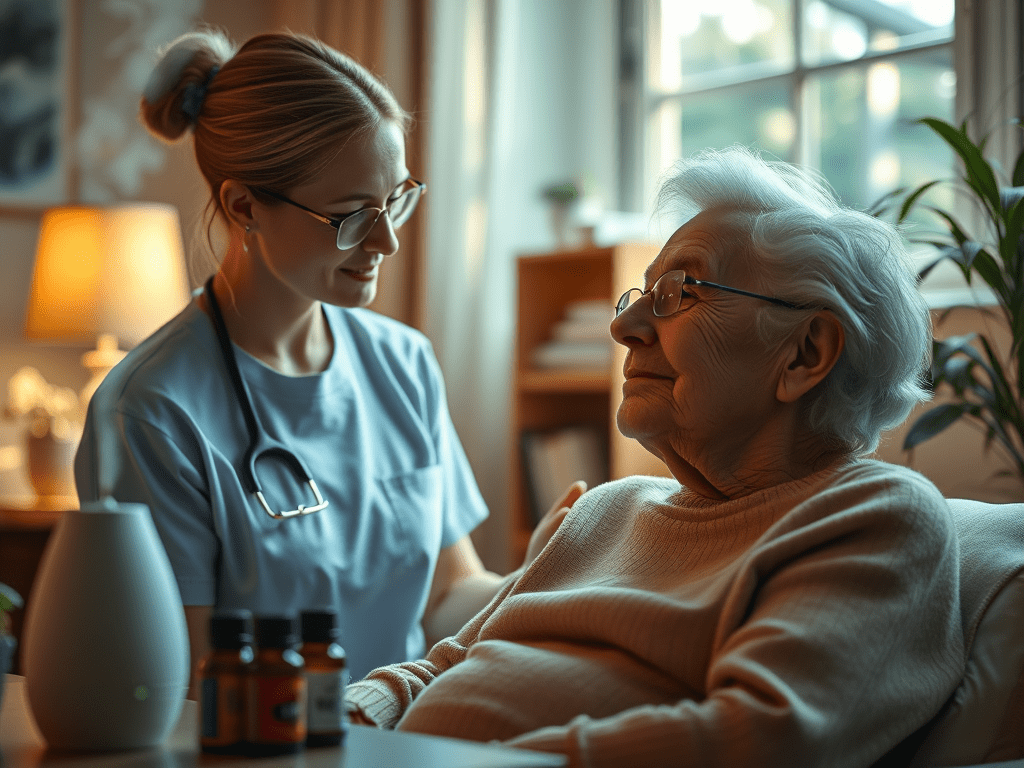
Approximately 80% of people suffering from dementia have Alzheimer’s disease. This common form of dementia creates symptoms such as aggression, psychosis, and sleep disturbance.
The damage caused by the side effects of this disease is irreversible. The gradual deterioration over time destroys memory and other cognitive abilities. This progresses until the simple task of self-care is beyond the ability of sufferers.
There is no cure for Alzheimer’s disease so the best today’s medication can hope for is to control and manage the symptoms. The focus is to help sufferers of this debilitating illness to live as comfortably as possible.
The Benefits of Essential Oil
Essential oil is fast becoming an additional benefit to the professional medical care of dementia patients. Recent studies on what impact aromatherapy has on the symptoms of dementia and Alzheimer’s have been very promising.
Essential oils have been used therapeutically for centuries to improve physical and mental health. However until recently there has been little confirmed proof of their efficacy.
A number of clinical trials have concluded that they provide an effective and safe treatment for psychiatric disorders. These include Alzheimer’s and related dementia diseases.
A well-documented study on the curative effect of aromatherapy in dementia was conducted recently. Participants were 28 elderly patients, 17 of whom had Alzheimer’s disease.
For a period of twenty eight days patients had aromatherapy treatment consisting of rosemary and lemon essential oils in the morning, and orange and lavender essential oils in the evening.
It was reported that all patients showed significant improvement in personal orientation relating to cognitive function. The researchers concluded that aromatherapy had the potential for improving cognitive function especially for Alzheimer’s disease. There were no reported side effects to the treatment.
Medication in Nursing Homes
The agitation, aggression, wanderings and other behavioral problems of these illnesses are a significant issue for the caregivers of patients. This is particularly true in care facilities. The care givers in some nursing homes all too often resort to the use of drugs to control their patient’s symptoms.
Aromatherapy the Alternative
The recent reports of an upsurge of the use of aromatherapy in nursing homes are exceedingly pleasing, and a big step in the right direction to using natural therapies. Trials using several essential oils are proving an effective alternative to drugs.
A nebulizing diffuser is the apparatus chosen by most health professionals to administer aromatherapy. As there is no dilution or heating with these implements, the essential oils stay pure. The aromatherapy scents are dispersed to a large area in a matter of minutes.
Effective Essential Oils
Although research is just beginning there is clinical evidence that certain scents activate beneficial chemical changes in the body and brain. Some essential oils stimulate, and some have been proven to improve memory and cognitive functions. Others have been found to effectively relieve stress and enhance wellbeing.
Recent aromatherapy testing has acclaimed some essential oils for their effective ability to treat and improve particular symptoms of dementia and Alzheimer’s disease.
Some of these tests found that aromatherapy using the essential oils lavender, lemon balm and chamomile all helped reduce anxiety and agitation as well as aiding restful sleep. The use of bergamot can help enliven the senses and fight depression. Peppermint is able to support memory and encourage appetite. Rosemary has been found to improve memory and cognition.
Olfactory Dysfunction
After 40 years of research, olfactory dysfunction in Alzheimer’s disease is now better understood. Some studies confirmed that olfactory dysfunction was possibly one of the earliest clinical symptoms of AD.
Some researchers believe the decreased sense of smell prevents some Alzheimer patients from getting the full benefit of aromatherapy. Tests are now being carried out using a treatment that combines aromatherapy together with topical application of essential oil.
Two recent studies were conducted in an aged care facility on aggressively agitated Alzheimer patients. Combining the two methods the participants were treated using lavender essential oil. The treatment had a positive effect on all participants, even the ones who had a decreased sense of smell.






 LGR Holistic Wellness
Leave a comment