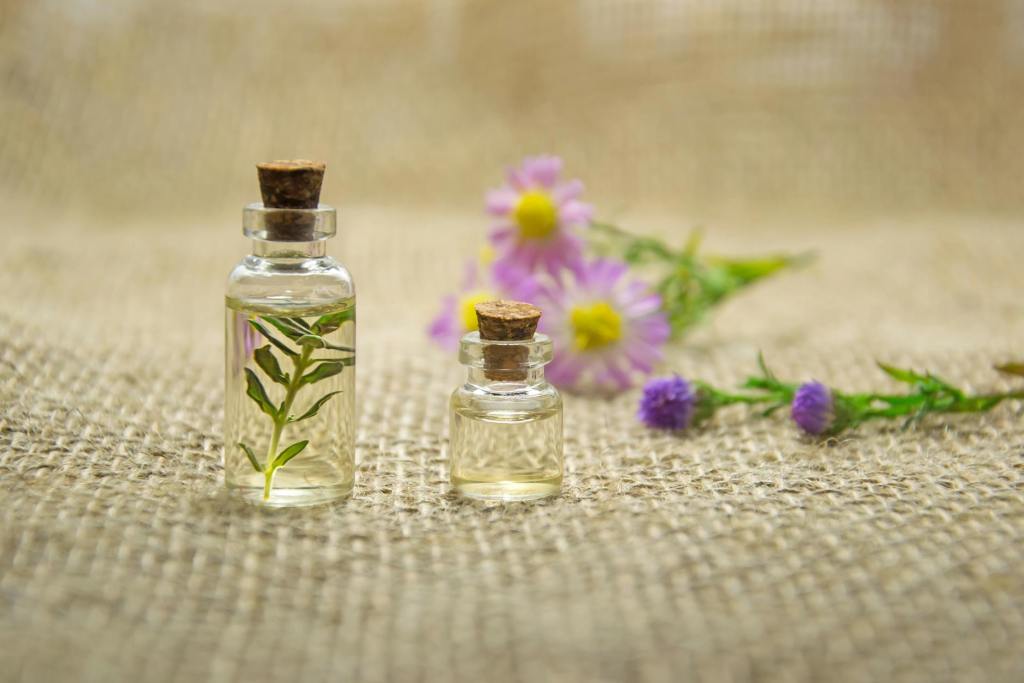
Aromatherapy, and the use of essential oils, help to stimulate the body’s own ability to heal by triggering different sensations and emotions. The wondrous ability of scents to impact a person’s mind and body can be used to great advantage in activating the body’s healing capabilities.
If you are new to the healing benefits of aromatherapy, it would be wise to consult with a qualified aromatherapist, so you only use the best oils for your needs. Don’t waste time and money, or impede your health progress, by using the wrong essential oils! Do it right so each aromatherapy session jumpstarts the healing process of your body.
The Healing Powers of Aromatherapy
Here are a few examples of what some researchers have found when using essential oils for health and healing.
One team of researchers found that sandalwood and lavender essential oils have the ability to increase alpha-wave activity in the brain. This effect translates to feelings of relaxation.
On the other hand, the scent of jasmine oil can trigger feelings of anxiety as shown in the increase of beta-wave activity in the brain.
Another team of experts supported these claims. Their studies also showed that inhaling jasmine stimulated the brain, similar to the effect experienced with caffeine, whereas the sandalwood oil elicited a calming effect.
As for topical applications, experts revealed that lavender essential oil is absorbed quickly when applied to the skin. This was seen in blood test results, where the highest levels of linalool were seen within twenty minutes of using the oil with an aromatherapy massage.
Topical application has double benefits – the essential oil is absorbed by the skin in minutes, while the scent is taken in via the nose in seconds.
Below are few health problems where aromatherapy has been used to help start the healing process.
Aromatherapy for Healing Skin Problems
Aromatherapy is helpful for people suffering from hives, bee sting inflammation, dermatitis or eczema. Some essential oils that are effective for these skin problems are lavender, tea tree, chamomile, lemon, cedarwood and geranium.
These essential oils have active compounds that are known to boost the immune system, which is helpful in fighting against certain skin problems.
Tea tree oil is one good example of an essential oil that helps speed up the healing process of many skin problems or wounds. It is a natural infection fighter!
For deep cut wounds, lavender is another ideal essential oil to apply. Lavender oil contains antiviral, antifungal and antibacterial compounds which make it beneficial for fighting against microbes that may promote wound infections. Plus, as a deep cut on the skin can be very painful, lavender also has analgesic and anti-inflammatory properties.
Rosemary essential oil is another oil that can be used for treating deep cuts. It also helps reduce bruising. Rosemary and lavender essential oils can both be used without the need to blend it with a carrier oil.
Aromatherapy for Healing Cardiovascular Problems
Rosemary essential oil is known for its ability to improve circulation. Its active compounds are also considered a tonic for the heart. Studies have shown that rosemary essential oil can be helpful in reducing cholesterol levels. This is why many aromatherapy experts recommend rosemary essential oil for assisting with the health of the circulatory system.
Clary sage is another essential oil that also helps in maintaining good cardiovascular health by reducing systolic blood pressure levels.
Two more essential oils that are helpful in managing blood pressure levels are helichrysum and ylang-ylang.



 LGR Holistic Wellness
Leave a comment